

“It’s really a pretty beautiful relationship”
September 08, 2026
Ahead of ORNL Day at LSU on September 10, Oak Ridge National Laboratory (ORNL) Associate Laboratory Director Robert Wagner and LSU Associate Vice Chancellor of Research John Flake talk through areas of shared interest in collaborative research—and where the national need, the lab’s focus, LSU and Louisiana line up.
ORNL signed a research partnership agreement with LSU in January 2026. Similar agreements exist with Argonne National Laboratory (2026) and Idaho National Laboratory (2025).
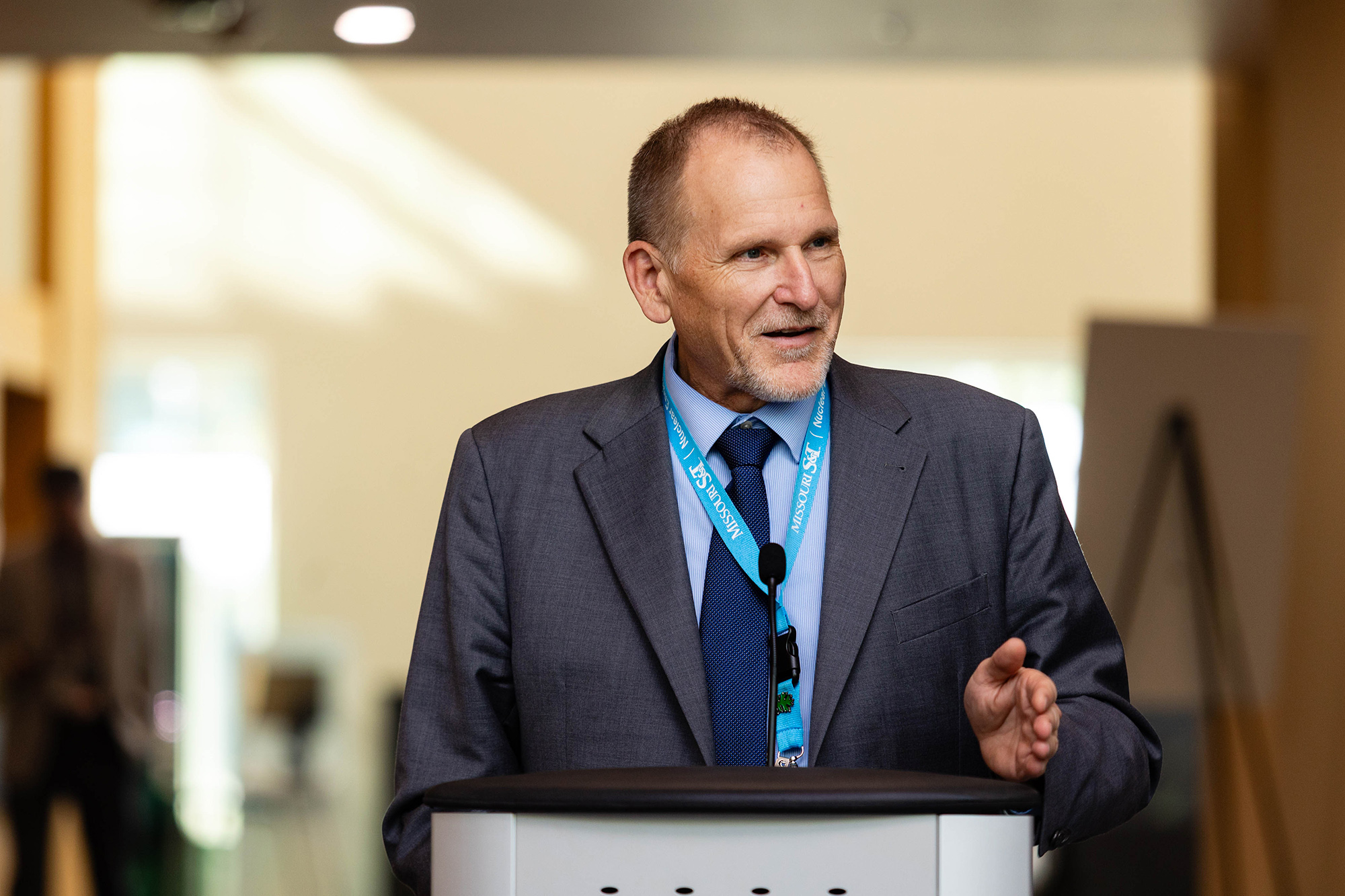
Robert Wagner speaks at ORNL’s Materials and Manufacturing Innovation Days event on August 19, 2026. ORNL is one of 17 U.S. Department of Energy (DOE) national labs and the largest science and energy lab in the DOE system. Located near Knoxville, Tennessee, ORNL began as Clinton Laboratories in 1943 as part of the Manhattan Project and was focused on splitting uranium atoms. Today, ORNL conducts research spanning nuclear energy, isotopes, supercomputing, advanced materials manufacturing, neutron science and biological systems science.
High-Performance Computing and AI
Flake: LSU works in several aspects of supercomputing and AI. Faculty like Hartmut Kaiser in the Division of Computer Science and Engineering developed some of the tools that process massive AI workloads with less energy. We also have experts who focus on how data centers may be integrated with the electric grid, how we move and use the heat from the computer chips and how we manage water resources used for evaporative cooling. Each chip can use as much as 100W and there can be hundreds of thousands of chips in one AI data center. There is an international race to build the best and biggest AI capacity, but energy demand and cooling present a challenge.
Wagner: The challenge is integrating all of these needs — from heat transfer at the chip level to power architectures, grid integration, infrastructure, water and other considerations. ORNL recently launched the Next-Generation Data Centers Institute to bring together the laboratory’s broad expertise around these challenges. That creates strong opportunities to work with a university like LSU that has both the breadth of expertise and connections to a region where these issues are playing out at scale.
Flake: Meta is building a data center that is close to 5 gigawatts in Richland Parish, Louisiana. Amazon is near that scale in northwest Louisiana, and another 3-gigawatt project underwritten by Anthropic is going in north of Baton Rouge.
Wagner: The energy requirements for facilities at that scale can be comparable to those of cities. Meeting that demand efficiently means thinking about power, heat and infrastructure as an integrated system.
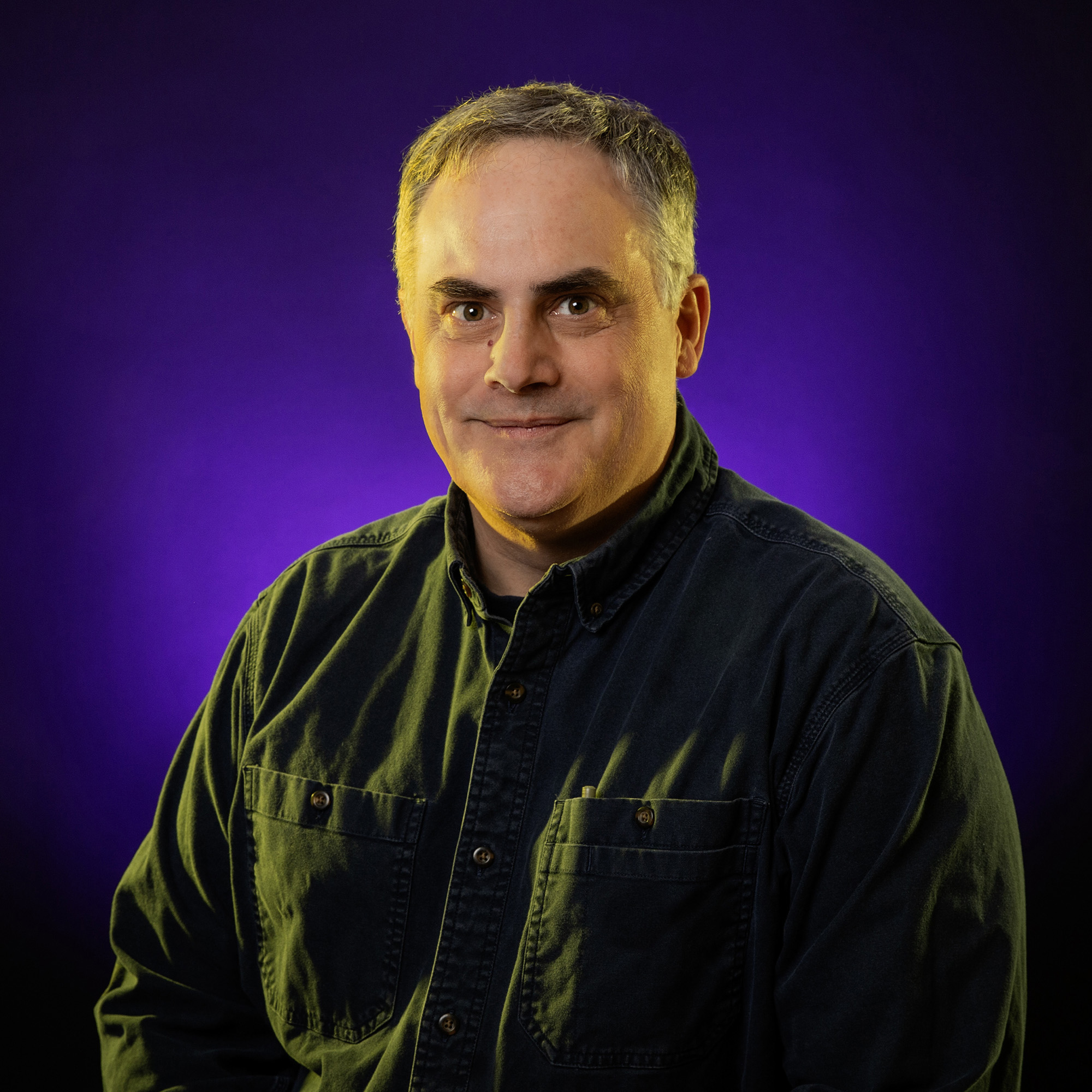
LSU Professor John Flake
Flake: Louisiana is going through a dynamic change. Sixty-five percent of America’s LNG leaves from here, and there’s real concern the average consumer could get squeezed between exporting LNG to Europe and the needs of AI. So, at LSU, we’ve been pushing on energy integration and nuclear—while electricity could go to the data center, the associated heat could be used by refineries and chemical plants.
Wagner: There’s a real opportunity in cascading energy. A high-temperature reactor, for example, could provide heat for industrial processes, with the remaining energy used to generate electricity and then potentially support lower-temperature applications. As we build large new facilities and capabilities, we should be thinking about how to make the most efficient use of the energy available to us.
Flake: Louisiana is second per capita in energy consumption, and almost all of that is natural gas and almost all of it goes to heat. It makes sense to squeeze everything we can out of every cubic foot of natural gas.
Wagner: Louisiana’s concentration of chemical processing creates an especially interesting opportunity because those industrial processes require heat across a range of temperatures. There may be ways to better integrate heat from sources such as nuclear energy and data centers with industrial processes, and that is an area where LSU’s regional expertise could be especially valuable.
Advanced Manufacturing
Flake: Companies in Louisiana are used to building big things, including ships, rockets, chemical plants and nuclear power plants. Now we are adding new nuclear and expanding more into rockets and spacecraft. I’ve toured the Manufacturing Demonstration Facility at Oak Ridge. It’s the best of its kind I’ve seen anywhere in the world. How can we leverage ORNL to accelerate Louisiana’s initiatives?
Wagner: Advanced manufacturing cuts across much of what we do, including energy, infrastructure and nuclear technologies. Some components that are important to U.S. energy infrastructure are no longer manufactured domestically, which can mean long lead times and reliance on foreign sources. There is an opportunity to translate lessons from ORNL’s manufacturing research to LSU and involve its faculty and students in developing solutions.
Water and Energy Resilience
Flake: We have talked about water. This is both a blessing and a hazard for Louisiana. Meta’s data center permit allows up to 25 million gallons a day to be pulled from the Mississippi River aquifer. How do we manage the use of Louisiana’s rivers and aquifers, so we don’t impact people who depend on that water, including farmers or for river transit? How do we keep our industries going in spite of hurricanes, flooding and coastal loss?
Wagner: That connection between water and energy infrastructure is something we’re working on at ORNL. In the Tennessee Valley, for example, our researchers are developing models that predict river temperatures and help us understand how changing water conditions affect hydropower and nuclear operations. More broadly, we’re working to better predict how natural systems interact with energy infrastructure so utilities and other decision-makers can plan for changing conditions. That kind of capability could be especially relevant in Louisiana, where you’re balancing industrial growth with water resources, flooding, hurricanes and coastal change.
Why LSU and ORNL?
Flake: ORNL is a great match for us for several reasons. We have decades of successful collaborations that have produced meaningful results. We are one of the original Oak Ridge Associated Universities consortium members from 1946. Our alumni work at ORNL, some of our faculty have worked at ORNL. Now we’re talking about joint appointments for leading researchers at LSU and ORNL. You are literally our closest national lab.
Wagner: LSU is a significant leader in engineering research and you’re also at that center of energy and industry and the gateway to the Gulf. There are probably very few universities that understand that environment as well. The Mississippi River truly is the backbone of the nation, and LSU is right there where it hits the Gulf. It’s really a pretty beautiful relationship when you look at what ORNL and LSU each offer. My hope for our meeting on September 10 is that we all walk away knowing who the people are who will take our partnership to the next level.