
Inaugural International Symposium on Epigenetic Inheritance 2026

LSU Vet Med hosted the 2026 Epigenetic Inheritance Symposium in Baton Rouge, Louisiana, from July 15-17.
The Inaugural International Symposium on Epigenetic Inheritance at LSU, from July 15–17, 2026, convened top scientists, trainees, and professionals worldwide to explore recent developments in epigenetic inheritance and its significance for biology, medicine, and public health. Supported by the LSU Provost’s Fund, this event creates a North American counterpart to the biennial series initiated in 2017 by Professor Isabelle Mansuy at ETH Zurich.
The three-day meeting featured outstanding keynote and plenary lectures, scientific presentations, poster sessions, and panel discussions covering topics ranging from molecular mechanisms and environmental influences to disease risk and evolution. Just as importantly, the symposium fostered new collaborations, meaningful discussions, and connections among researchers across disciplines and career stages.
Awards were presented for outstanding graduate student, postdoctoral, and undergraduate posters in recognition of excellence in research and scientific communication.
The symposium concluded with a forward-looking discussion on building an international research community, strengthening collaborations, and establishing this meeting as a recurring forum for the field.
We are grateful to all of our speakers, participants, sponsors, volunteers, and organizers for making this inaugural meeting such a success. The enthusiasm and engagement throughout the symposium demonstrated the strength and momentum of this rapidly growing field.
This meeting marks the beginning of what we hope will become a lasting tradition at LSU. We look forward to welcoming the epigenetic inheritance research community back in 2028 for the next symposium. Details are below.
PICTURES FROM THE 2026 SYMPOSIUM
Key themes include
- Germline mechanisms of epigenetic transmission
- RNA-mediated and chromatin-based inheritance pathways
Parental diet, metabolism, and behavioral reprogramming in offspring - Developmental plasticity and multi-generational stability
- Evolutionary consequences of non-genetic inheritance
- Epigenetic variation in human health and disease
Organizing Committee
Sonia de Assis, PhD, Associate Professor, Department of Oncology, Georgetown University Medical Center
Chris Axelrod, Ph.D., Director, Integrated Physiology and Molecular Medicine Laboratory, Pennington Biomedical Research Center
Isabelle Mansuy, Ph.D., Professor of Neuroepigenetics, ETH Zurich & University of Zurich
Alexander Murashov, MD, Ph.D. — Chair, Professor and Department Head, Comparative Biomedical Sciences, LSU School of Veterinary Medicine
Upasna Sharma, Ph.D., Associate Professor, Department of Molecular, Cell & Developmental Biology, University of California, Santa Cruz
Michael Skinner, Ph.D., Founding Director, Center for Reproductive Biology, School of Biological Sciences, Washington State University
Program
| Tuesday, July 14 | Arrival | |
|---|---|---|
| 19:00 - 21:00 | Welcome reception and registration |
Conference WIFI: LSUAlumni-Event User ID: Tigers Password:Tigers |
| Wednesday, July 15 | ||
|
6:00 6:30 - 7:30
|
Breakfast buffet at Cook Hotel Sunrise Yoga |
Mats provided out by front fountain (please register on events page) |
| 7:30 - 8:30 | Conference Registration starts | |
| 8:30 - 8:40 | Introduction | |
| 8:40 - 9:20 | Plenary Lecture: Understanding the "sperm RNA code" and epigenetic inheritance with emerging tools | Qi Chen |
| 9:20 - 9:50 | Sperm RNA-mediated intergenerational epigenetic inheritance. | Upasna Sharma |
| 9:50 - 10:20 | Coffee break | |
| 10:20 - 10:50 | Transgenerational Inheritance of Epigenetic Memory in Mammals | Yuta Takahashi |
| 10:50 - 11:20 | Epigenetic Programming in Sperm: Mechanisms of Fertility and Disease Transmission | Sarah Kimmins |
| 11:20 - 11:40 | 2 Early Career Talks (10 min) | Neel Aluru, Humairia Gowher |
| 11:40 - 13:10 | Lunch break | |
| 13:10 - 13:50 | Plenary Lecture: Environmental toxins impact on germline epigenetics (online) | Michael Skinner |
| 13:50 - 14:20 | Sperm RNAs, placentation and fetal growth | Sonia de Assis |
| 14:20 - 14:50 | The Key Role of Placental miRNA in the Crosstalk Driving Fetal Fat Accrual | Perrie O'Tierney-Ginn |
| 14:50 - 15:20 | 3 Flash Talks | Rebecca Robker, Gabriel Peterman (5 Min), Rashmi Joshi (5 Min), Hongbing Liu |
| 15:20 - 16:50 | Coffee and Poster Session | Wed Poster Session participants |
| 18:00 - 21:00 | Dinner | |
| 19:30 | Tour of Tiger Stadium | Please register on the events page |
| Thursday, July 16 | ||
|
6:00 6:30-7:30 8:00 - 8:20 |
Breakfast at Hotel Sunrise Yoga Registration |
Mats provided please sign up on website |
| 8:20 - 8:30 | Provost Welcome | Stephania Cormier |
| 8:30 - 9:20 | Keynote Lecture: How life experiences can influence us and our descendants: An epigenetic perspective | Isabelle Mansuy |
| 9:20 - 9:50 | Investigating the Metabolic Initiation of Transgenerational Epigenetic Inheritance | Patrick Allard |
| 9:50 - 10:20 | Coffee break | |
| 10:20 - 11:00 | Effects of maltreatment during infancy on RNA signatures in rhesus macaques – lessons from EVs | Brian Dias |
| 11:00 - 11:30 | LBRN Lecture: Role of Ribosome Heterogeneity in Epigenetic Inheritance | Eric Greer |
| 11:30 - 12:00 | 3 Early Career Talks (10 minutes) | Megahli Joshi, Alexandre Champroux, Shallinie Thangadurai |
| 12:00 - 13:30 | Lunch break and vendor show | |
| 13:30 - 14:00 | Paternal Epigenetic Inheritance as a Determinant of Metabolic Disease Susceptibility | Valérie Grandjean |
| 14:00 - 14:30 | The Intergenerational Impact of Paternal Pre-Conceptional Health (online) | Rafffaele Teperino |
| 14:30 - 16:00 | Coffee and Poster Session II | Thursday Poster session participants |
| 16:00 - 16:30 | How epigenetic processes enhance natural selection by exposing hidden genetic variation | Benjamin Oldroyd |
| 16:30 - 17:10 | Plenary Lecture: Nongenetic inheritance in evolution and everyday life (online) | Russell Bonduriansky |
| 18:00 - 21:00 | Dinner | |
| 19:15 | Tiger Talk at the Tiger Habitat: LSU is home to the only live tiger mascot in the United States, and he resides on the LSU campus. His care is provided by LSU Vet Med, and Ginger will speak about the history of the live mascot program and how LSU Vet Med provides his care. | Ginger Guttner - sign up on events website |
| Friday, July 17 | ||
|
6:00 8:00 - 8:20 |
Breakfast buffet at Cook Hotel Registration |
|
| 8:30 - 9:20 | Keynote Lecture | Eric Miska |
| 9:20 - 9:50 | Diet, Sperm, and Epigenetic Transmission: Mechanisms of Paternal Influence (online) | Anita Ost |
| 9:50 - 10:20 | Intergenerational regulation of brain energy metabolism driven by parental dietary and exercise exposures | Alexander Murashov |
| 10:20 - 10:40 | Coffee break | |
| 10:40 - 11:10 | The sins of the fathers: Intergenerational effects of paternal stimulants | Chris Pierce |
| 11:10 - 11:40 | Inter- and Transgenerational Consequences of Adolescent Opioid Exposure on Reward and Addiction Vulnerability | Fair Vassoler |
| 11:40 - 12:10 | Paternal drinking and the epigenetic influences on offspring mitochondrial function, placental health, structural birth defects, and age-related disease | Michael Golding |
| 12:10 - 12:55 | Lunch break | |
|
12:55 - 1305
13:05 - 13:45 |
Flash Talk
Elovanoid-Mediated Epigenomic Modulation of Mitochondrial Functions and Homeostatic Synaptic Plasticity in Alzheimer’s Disease |
Surjyadipta Bhattacharjee
Nicolas Bazan |
| 13:45 - 14:00 | Awards and Closing | |
| 14:00 - 14:20 | Coffee break | |
| 14:20 - 15:20 | Strategic Forum - Roundtable 1: Toward Mechanistic Resolution of Transgenerational Inheritance | Isabelle Mansuy, Sarah Kimmins, Qi Chen |
| 15:20 - 15:40 | Coffee break | |
| 15:40 - 16:40 | Strategic Forum - Roundtable 2: Building the Next Phase of the Field | Eric Miska, Benjamin Oldroyd, Patrick Allard, Brian Dias |
| 18:30 21:00 | Dinner and Live Music at the Faculty Club | Bus transportation starts Register (additional charge) on website |
| Saturday, July 18 | Departure |
Speakers
| Speaker | Affiliation | Photo |
|---|---|---|
| Patrick Allard | Institute for Society & Genetics at UCLA - USA | 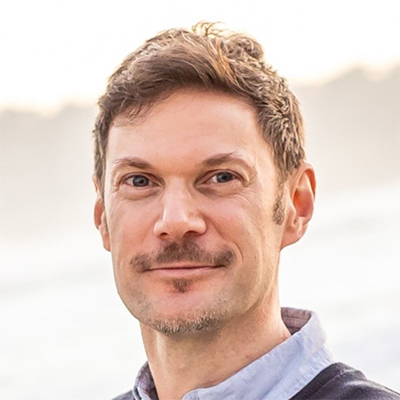 |
| Nicolas Bazan | LSU Health Sciences Center, New Orleans | 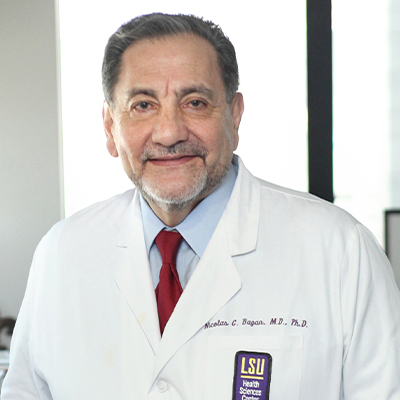 |
| Russell Bonduriansky | UNSW - Sydney, Australia |  |
| Qi Chen | University of Utah - USA | 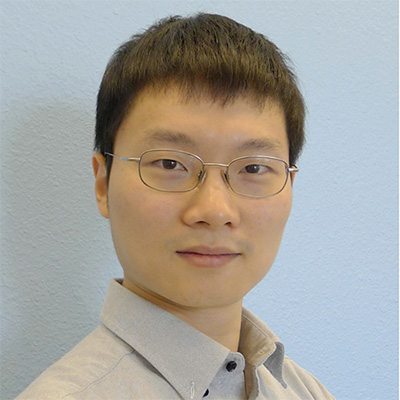 |
| Sonia de Assis | Lombardi Comprehensive Cancer Center, Georgetown University - USA | 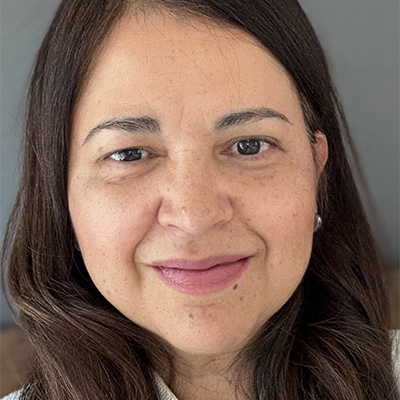 |
| Brian Dias | USC Keck School of Medicine and Children's Hospital - Los Angeles, USA | 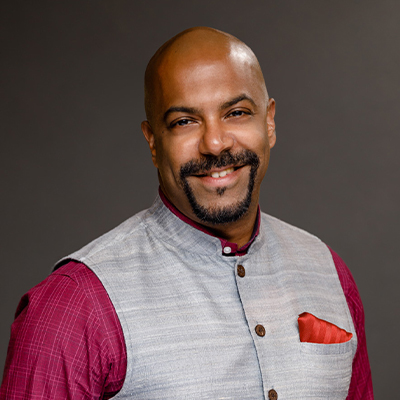 |
| Michael Golding | Texas A&M University - USA |  |
| Valérie Grandjean | Université Cote d'Azur/Inserm (C3M) - France | 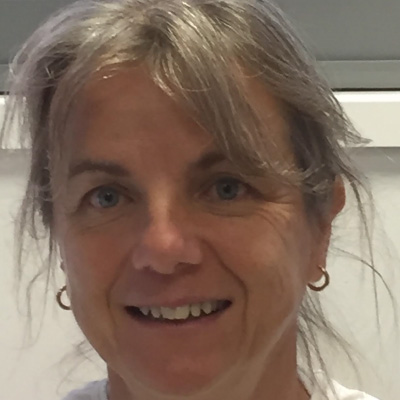 |
| Eric Greer | Washington University in St. Louis, Washington University Medicine - USA | 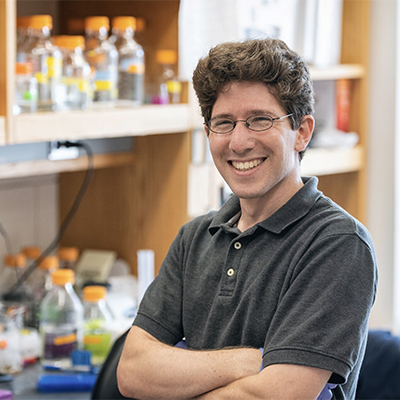 |
| Sarah Kimmins | Université de Montréal (and CRCHUM) - Canada |  |
| Isabelle Mansuy | University of Zurich and ETH - Zurich, Switzerland | 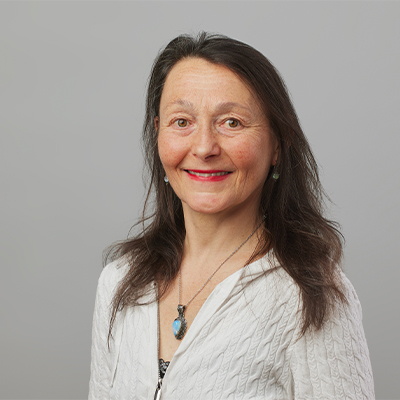 |
| Eric Miska | University of Cambridge - UK |  |
| Alexander Murashov | Louisiana State University School of Veterinary Medicine - USA | 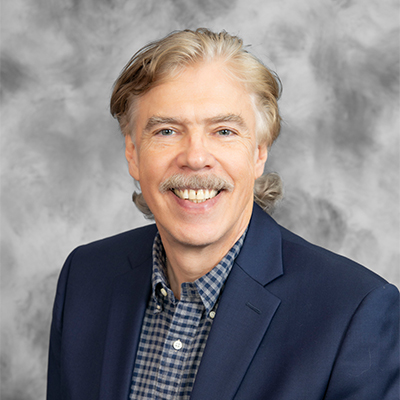 |
| Benjamin Oldroyd | The University of Sydney - Australia | 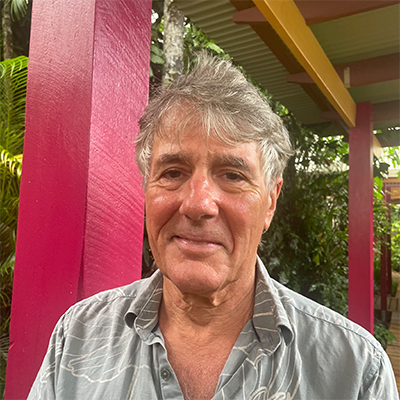 |
| Anita Ost | Linköping University - Sweden | 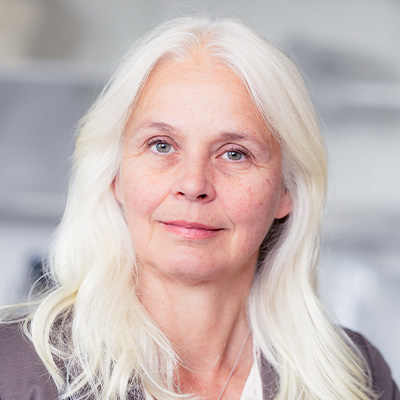 |
| Perrie O'Tierney Ginn | Mother+Baby Institute and Friedman School of Nutrition Science and Policy, both at Tufts University - USA | 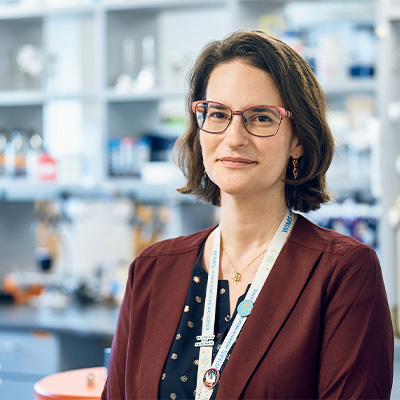 |
| Chris Pierce | Rutgers Robert Wood Johnson Medical School - USA | 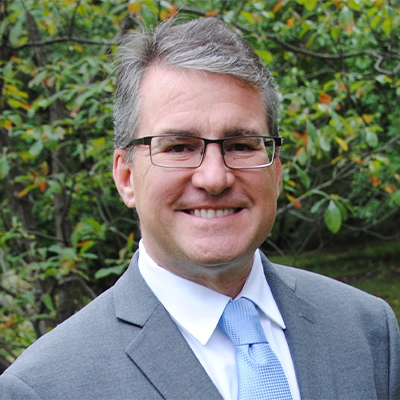 |
| Upasna Sharma | University of California, Santa Cruz - USA | 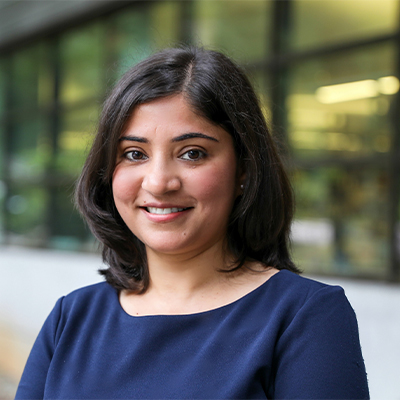 |
| Mike Skinner | Washington State University - USA | 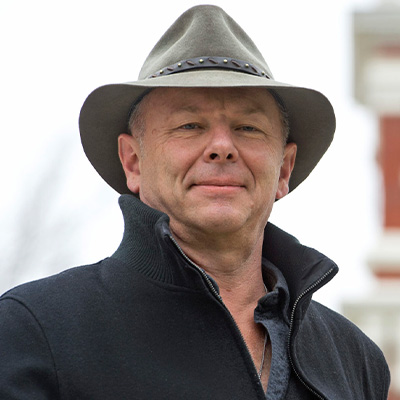 |
| Yuta Takahashi | Kumamoto University - Japan | 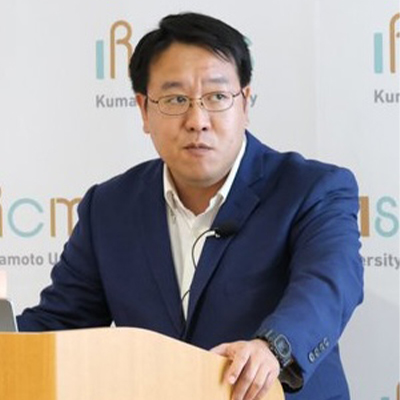 |
| Raffaele Teperino | Helmholtz Munich - Germany | 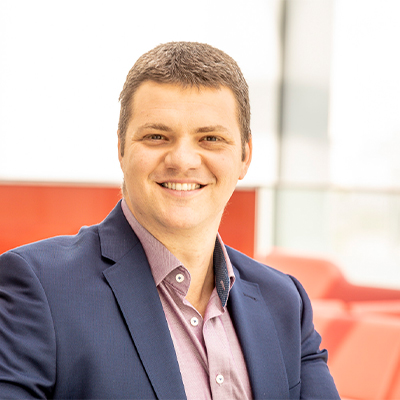 |
| Fair Vassoler | Tufts University - USA | 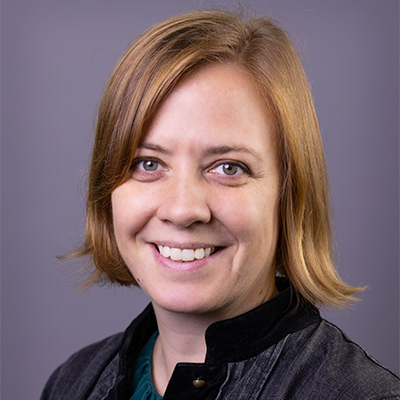 |
Presentation Guidelines
Poster Presentation Guidelines
Posters should be printed in A0 format, Landscape Orientation preferred:
- 33.11 x 46.81 inches
- 841 x 1189 mm
Poster should clearly outline the title, authors, affiliations, background, results, and conclusions.
Short Talk Guidelines
Oral presentations will be 5 minutes in length with 5 additional minutes for question/answer (5+5 format).
Oral presenters should clearly highlight the background/significance, rationale, outcome measures, conclusions, and any relevant acknowledgments. Should presenters run over on time, time will be taken away from the question/answer period.
Presentations should be saved as a Microsoft powerpoint file (.ppt) in widescreen format (16:9 ratio). Presentations will be transferred to a local device on the day of presentation.
Registration
The registration fee includes admission to all scientific sessions, coffee breaks and refreshments, and meals (lunch and dinner). Breakfast is provided by the Lod Cook Hotel.
Note that the registration does not cover lodging and travel accommodations. Information on accommodations is under Lodging on this page.
Please direct any questions to gstale1@lsu.edu.
Please complete the form below to submit your registration information. You will then need to click on the Submit Payment for Registration button to submit your payment.
Hotel Information
Overlooking scenic University Lake on the campus of LSU, The Cook Hotel and Conference Center at LSU is a unique boutique hotel in Baton Rouge. We invite you to discover a destination that sets the standard for personalized hospitality. Arriving at the hotel, you are greeted by Spanish Colonial Revival-style architecture framing a charming, elegant lobby featuring marble floors, curated original artwork by renowned Louisiana artists, and warm lighting. Wander outside to explore courtyards dotted with sugar kettle foundations, lush palms, and native Louisiana landscaping. With immaculate, spacious accommodations, breakfast and lunch offerings, and a lively cocktail bar, The Cook Hotel is the ideal business and social hub moments from the top attractions, dining, and nightlife in Baton Rouge.
Travel Information
Air Transportation
Baton Rouge Metropolitan Airport (BTR) is the preferred destination for air travel as it is located 15-20 minutes by car from The Cook Hotel and Conference Center. Participants may also fly into the Louis Armstrong New Orleans International Airport (MSY), which is ~70 minutes bar car from The Cook Hotel and Conference Center.
Ground Transportation
Upon arrival to Baton Rouge Metropolitan Airport (BTR) or Louis Armstrong New Orleans International Airport (MSY), attendees will travel to the Cook Hotel and Conference Center at LSU using any of the provided transportation systems listed below.
Uber/Lyft: Rideshare companies such as Uber and Lyft are widely available in the Baton Rouge area and may provide the cheapest means of ground transportation depending on the time of arrival and business of the airport.
Car Rental Services: The BTR airport offers several car rental services available near the baggage claim. Avis, Budget, Enterprise, Hertz, and National offer cars for rental. If you plan to explore the city outside of The Cook Hotel and Conference Center area, a rental car may be useful as public services are limited in the area.
Tiger Airport Shuttle: Also available for transportation from MSY. They offer transportation directly from the airport to the hotel and operate 24/7, but you will need to call ahead to make travel reservations in advance (225)-333-8167 and have flight information available.
Events
The Symposium includes a welcome reception and a closing dinner.
Welcome Reception
Wednesday, July 15 at 18:00
Light hors d’oeuvres and refreshments will be served.
Sunrise Yoga
Wednesday, July 15, 6:30 - 7:30
Thursday, July 16, 6:30 - 7:30
Outside by the front fountain at the Lod Cook Conference Center
There is no charge and mats will be provided.
Tiger Stadium Walking Tour
Wednesday, July 15 at 19:30
Tiger Talk
Thursday, July 16 at 19:15
Tiger Talk at the Tiger Habitat: LSU is home to the only live tiger mascot in the United States, and he resides on the LSU campus. His care is provided by LSU Vet Med, and Ginger Guttner, Assistant Director Communications, will speak about the history of the live mascot program and how LSU Vet Med provides his care. This event will take place at the Tiger Habitat.
Closing Dinner and Live Music
Friday, July 17 at 18:00 at the LSU Faculty Club
Closing Dinner with live music from the Zydeco Road Runners
Bus transportation is provided.
$80 per person
You will need to scroll down to "Farewell Dinner."
Set within LSU’s historic Faculty Club, The Club at Union Square provides an elegant setting for our closing event. With its refined interiors, art-deco details, and comfortable lounge spaces, the venue offers a distinctive campus experience for gathering and conversation.
The evening will feature a curated dinner reflecting Southern-inspired cuisine, prepared by LSU Catering, whose full-service team ensures a seamless event experience.
During the dinner, guests will enjoy a live musical performance by Zydeco Roadrunners.
Zydeco music originated in southern Louisiana among Creole communities, blending traditional Cajun music with blues, rhythm and blues, and African influences. Emerging in the early 20th century, it features instruments like the accordion and washboard (frottoir), creating a distinctive, danceable sound. The genre was popularized nationally by artists like Clifton Chenier, often called the “King of Zydeco.” Zydeco has deep roots in Creole identity and storytelling, often sung in Creole French or English, reflecting the struggles and joys of rural life. Today, it remains a vibrant part of Louisiana’s cultural heritage, celebrated at festivals and dances across the region. Please join us for an hour-long musical performance by the Zydeco Roadrunners.
Sponsors














Learn about Baton Rouge and Louisiana
Our Louisiana
BATON ROUGE IS PERFECTLY LOCATED IN THE HEART OF LOUISIANA.
A PREMIERE EDUCATIONAL AND RESEARCH CAMPUS.
LOUISIANA IS FAMOUS FOR THE INCREDIBLE RICHNESS OF ITS CULTURAL EXPERIENCES.
Located on the banks of the mighty and historic Mississippi River, LSU is not just an institution of higher learning. We are a community and a way of life. Join us and explore your ambitions, pursue your dreams, and take your career to new levels.
Our campus is located in beautiful Baton Rouge, a vibrant and growing metropolitan
area with over 300 years of history. Enjoy amazing culinary experiences, unique architecture,
a thriving
arts scene, unparalleled musical performances, thrilling sporting events, vibrant
festivals and celebrations, and southern hospitality at its finest.
We are located just an hour’s drive from the international city of New Orleans, the home of Mardi Gras, jazz music, and restaurants that are among the finest in the world. We are surrounded by natural beauty that is a paradise for outdoor enthusiasts. Enjoy a short trip to the shores of the Gulf of Mexico for beautiful beaches, or explore the bayous of the Atchafalaya Basin, a vast natural wonder with a storied past. A world of new experiences awaits you in the heart of Louisiana.
Acknowledgments
The Organizing Committee gratefully acknowledges the generous support of the Louisiana State University Provost's Fund – Big Idea Research Grants Program, the Louisiana State University School of Veterinary Medicine, and the Department of Comparative Biomedical Sciences for making the inaugural International Symposium on Epigenetic Inheritance possible.
We also sincerely thank the Louisiana Biomedical Research Network (LBRN), the Epigenetics Society, and our industry partners and exhibitors for their valuable support.
We are especially grateful to our invited speakers, session chairs, poster judges, student volunteers, and organizing committee members for their dedication and contributions. Finally, we thank all participants whose scientific presentations and discussions have made this symposium a success.